Equipment doesn’t shut down cleanly on its own. Residual energy in machines—electrical, hydraulic, pneumatic, chemical, or mechanical—can activate systems unexpectedly. When maintenance teams open panels or service components, that sudden release can maim or kill. That’s where lock out tag out locks come in. These devices are the physical enforcement of safety protocols designed to isolate energy sources and prevent accidental startup.
Unlike warnings or procedures alone, lock out tag out (LOTO) locks provide a tangible barrier between danger and personnel. They’re part of a broader energy control program, mandated by OSHA in the U.S. and mirrored in safety regulations worldwide. But simply owning a lock isn’t enough. The effectiveness of LOTO locks depends on correct selection, application, and adherence to a disciplined workflow.
The Role of Lock Out Tag Out Locks in Hazard Control
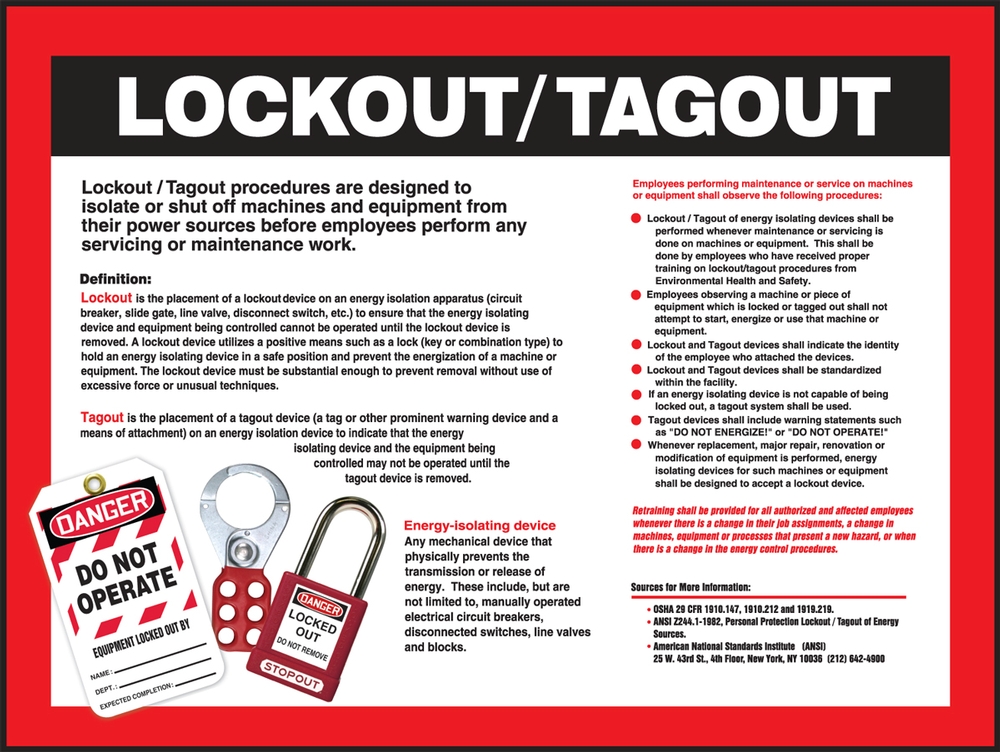
Lock out tag out locks are not just accessories—they’re engineered safety controls. Their primary function is to secure energy-isolating devices like circuit breakers, disconnect switches, valves, and drive couplings. Once locked, these points can’t be operated until the lock is removed by the authorized individual.
Think of a conveyor belt system in a food processing plant. Before cleaning or repair, the motor must be de-energized. A worker might flip the disconnect switch, but without a lock, someone could easily turn it back on—intentionally or by mistake. A LOTO lock physically prevents that re-energization. Combined with a tag, it communicates who locked the device, why, and when.
These locks are especially critical in environments with:
- Multi-shift operations where communication gaps exist
- Complex machinery with multiple energy sources
- Contract or temporary workers unfamiliar with local systems
Without proper LOTO, the risk isn’t theoretical. OSHA estimates that nearly 10% of serious accidents in manufacturing involve unexpected energization or startup of machinery. Lives depend on these locks working as intended.
Types of Lock Out Tag Out Locks and Where to Use Them
Not all LOTO locks are the same. The right choice depends on the energy source, equipment design, and environmental conditions. Here’s a breakdown of the most common types and their applications:
#### 1. Padlock-Style LOTO Locks These are the most recognizable—small, durable padlocks made from non-conductive materials like nylon or polycarbonate. They’re ideal for circuit breakers, disconnect switches, and valve handles.
- Use Case: Electrical panels in dry, indoor environments
- Limitation: Not suitable for extreme heat or corrosive settings
#### 2. Valve Lockouts Designed to secure ball valves, gate valves, or lever-operated pipes. They block rotation or movement with a custom-fit clamp or sleeve.
- Use Case: Chemical processing plants, water treatment facilities
- Tip: Choose models with universal fit or specific valve size compatibility
#### 3. Circuit Breaker Lockouts These are not locks themselves, but housings that fit over breakers. The actual lock secures the housing in the off position.
- Use Case: Electrical rooms with multi-breaker panels
- Limitation: Must match breaker size and type—universal doesn’t always work

#### 4. Plug and Cord Locks Prevent reinsertion of electrical plugs. Once a cord is locked, it can’t be plugged back in.
- Use Case: Portable tools, temporary machinery, lab equipment
- Benefit: Fast deployment, minimal setup
#### 5. Group Lockout Stations These are shared lockout points where multiple workers apply their individual locks. Used in complex maintenance tasks requiring several people.
- Use Case: Refinery maintenance, large-scale HVAC servicing
- Rule: No restart until every lock is removed—no exceptions
Each type addresses a specific failure mode. Choosing the wrong one creates a false sense of security. For example, using a standard padlock on a high-torque valve might not prevent accidental opening under pressure.
How to Implement LOTO Locks in Real-World Workflows
Having the right locks is only half the battle. Implementation matters more. A flawed process renders even the best hardware useless.
Here’s a streamlined, real-world LOTO workflow used in compliant facilities:
- Preparation
- Identify all energy sources associated with the machine. This includes primary power, stored energy (springs, capacitors), and secondary systems (hydraulic accumulators).
- Notification
- Inform all affected employees that maintenance is starting and equipment will be locked out.
- Shutdown
- Use normal stopping procedures to power down the machine.
- Isolation
- Turn off and disconnect all energy-isolating devices. This is where LOTO locks are applied.
- Lock and Tag
- Apply your personal lock and a tag with your name, date, and reason. Never share locks or use master keys as a routine.
- Stored Energy Check
- Bleed, block, or dissipate any residual energy—discharge capacitors, vent air lines, block moving parts.
- Verify De-Energization
- Attempt to restart the machine (safely) to confirm it can’t operate. This is the proving step.
- Maintenance
- Perform the required work.
- Restoration
- Remove locks only after ensuring everyone is clear, guards are replaced, and systems are safe to restart.
A common mistake? Skipping step 7. Workers assume isolation worked without testing. But assumptions kill. One automotive plant had a fatality when a technician assumed a hydraulic line was depressurized—until it surged during disassembly.
Another issue: using LOTO locks for non-maintenance tasks, like keeping a door open. That trivializes their purpose and increases the risk of misuse during real emergencies.
Common Mistakes That Undermine LOTO Lock Effectiveness
Even with proper training, organizations fail in subtle ways. These mistakes erode safety culture:
- Using one lock for multiple people
- Each worker must apply their own lock. Group lockout boxes exist for this reason.
- Tagging without locking
- Tags alone are not sufficient. They’re informational, not physical barriers.
- Damaged or worn locks
- Cracked housings, sticky shackles, or faded tags compromise reliability. Inspect monthly.
- Lack of lock traceability
- If a lock is left on and the owner is off-site, there must be a documented procedure for authorized removal.
- Inadequate employee training
- OSHA requires retraining every three years or after procedural changes. Many companies skip this.

One food packaging facility was fined $78,000 after an operator bypassed a LOTO procedure because “it took too long.” The root cause? No management oversight, outdated training, and a culture that prioritized speed over safety.
LOTO isn’t just hardware—it’s behavior.
Choosing the Right LOTO Lock: Key Selection Criteria
Selecting a lock isn’t about price or color. It’s about fit, function, and durability. Use these criteria to guide decisions:
- Material
- Use non-conductive, non-sparking materials (e.g., nylon) in electrical or explosive environments.
- Shackle Size
- Must fit the isolating device. A 5mm shackle won’t work on a large valve stem.
- Weather Resistance
- Outdoor or high-moisture areas need UV-stabilized, rust-proof models.
- Keyed Alike vs. Keyed Different
- Keyed alike locks (same key for multiple locks) simplify logistics but increase risk if keys are lost. Keyed different (unique key per lock) enhances security but complicates access.
- Color Coding
- Use colors to indicate department or lock type—red for electrical, blue for mechanical, yellow for contractors.
- Compliance Markings
- Look for locks that meet ANSI Z244.1 or OSHA 1910.147 standards.
Smart facilities use lockout kits organized by machine type—pre-packed with all necessary devices. This reduces errors and speeds up procedures.
Top 5 LOTO Lock Solutions for Industrial Use
For teams building or upgrading their lockout programs, these five solutions are widely trusted in the field:
| Product | Type | Key Feature | Best For |
|---|---|---|---|
| Grace Industries LOTO-2000 | Padlock & Accessories | Modular system with universal adaptability | Manufacturing plants |
| Brady Lockout Station BLSS1 | Group Lockout | 13-lock hasp with durable housing | Multi-worker maintenance |
| Master Lock 4680DAT | Valve Lockout | Fits 1/2” to 4” ball valves | Oil & gas, water treatment |
| Honeywell Saperlock Pro | Circuit Breaker Lockout | Tool-free installation, wide compatibility | Electrical rooms |
| 3M DBI-SALA 1400300 | Plug Lockout | Secures NEMA 5-15 and 5-20 plugs | Labs, hospitals, IT centers |
Each product solves a specific problem. The Saperlock Pro, for instance, eliminates the need for Allen keys or screwdrivers—critical in time-sensitive shutdowns.
Avoid generic hardware store locks. They may look similar but lack the durability, resistance, and compliance features needed in industrial settings.
Building a Culture Where LOTO Locks Are Respected
Equipment fails. Procedures fade. But culture endures.
The most successful safety programs don’t rely on audits or posters. They create environments where every technician feels empowered—and obligated—to apply their lock.
Signs of a strong LOTO culture:
- Workers challenge shortcuts
- Supervisors participate in lockout drills
- Near-misses involving energy control are reported and reviewed
- Locks are inspected and replaced proactively
- Contractors follow the same rules as full-time staff
One paper mill reduced LOTO incidents by 90% over two years not by buying new locks, but by appointing “LOTO champions” in each department—employees trained to audit, coach, and report.
The lock is just the symbol. The real protection is in the mindset.
Lock out tag out locks are small devices with massive consequences. When chosen correctly and used consistently, they prevent tragedies. But they demand more than hardware—they require discipline, training, and daily commitment. Audit your current system. Test your procedures. Replace worn locks. And never assume a machine is safe just because it’s off. True safety starts with a lock, a tag, and a promise to protect every worker, every time.
FAQ
What should you look for in What Are Lock Out Tag Out Locks and Why They Matter? Focus on relevance, practical value, and how well the solution matches real user intent.
Is What Are Lock Out Tag Out Locks and Why They Matter suitable for beginners? That depends on the workflow, but a clear step-by-step approach usually makes it easier to start.
How do you compare options around What Are Lock Out Tag Out Locks and Why They Matter? Compare features, trust signals, limitations, pricing, and ease of implementation.
What mistakes should you avoid? Avoid generic choices, weak validation, and decisions based only on marketing claims.
What is the next best step? Shortlist the most relevant options, validate them quickly, and refine from real-world results.