A maintenance technician starts servicing a conveyor system. The machine is off—but is it truly de-energized? Without a verified lockout tagout (LOTO) procedure, that technician risks severe injury. One overlooked step, one unrecorded tag, and safety fails.
That’s where a lockout tagout log sheet printable comes in. It’s not just paperwork—it’s a critical control document that verifies isolation, assigns accountability, and creates a legal audit trail. In high-risk environments, a printable LOTO log isn’t optional. It’s a frontline defense.
This guide cuts through the clutter. You’ll get actionable insights on designing, using, and maintaining effective printable LOTO logs—plus real-world templates you can deploy immediately.
Why a Printable LOTO Log Sheet Matters
Energy control isn’t just about padlocks and tags. It’s about documentation. OSHA standard 29 CFR 1910.147 requires employers to document each servicing event involving hazardous energy.
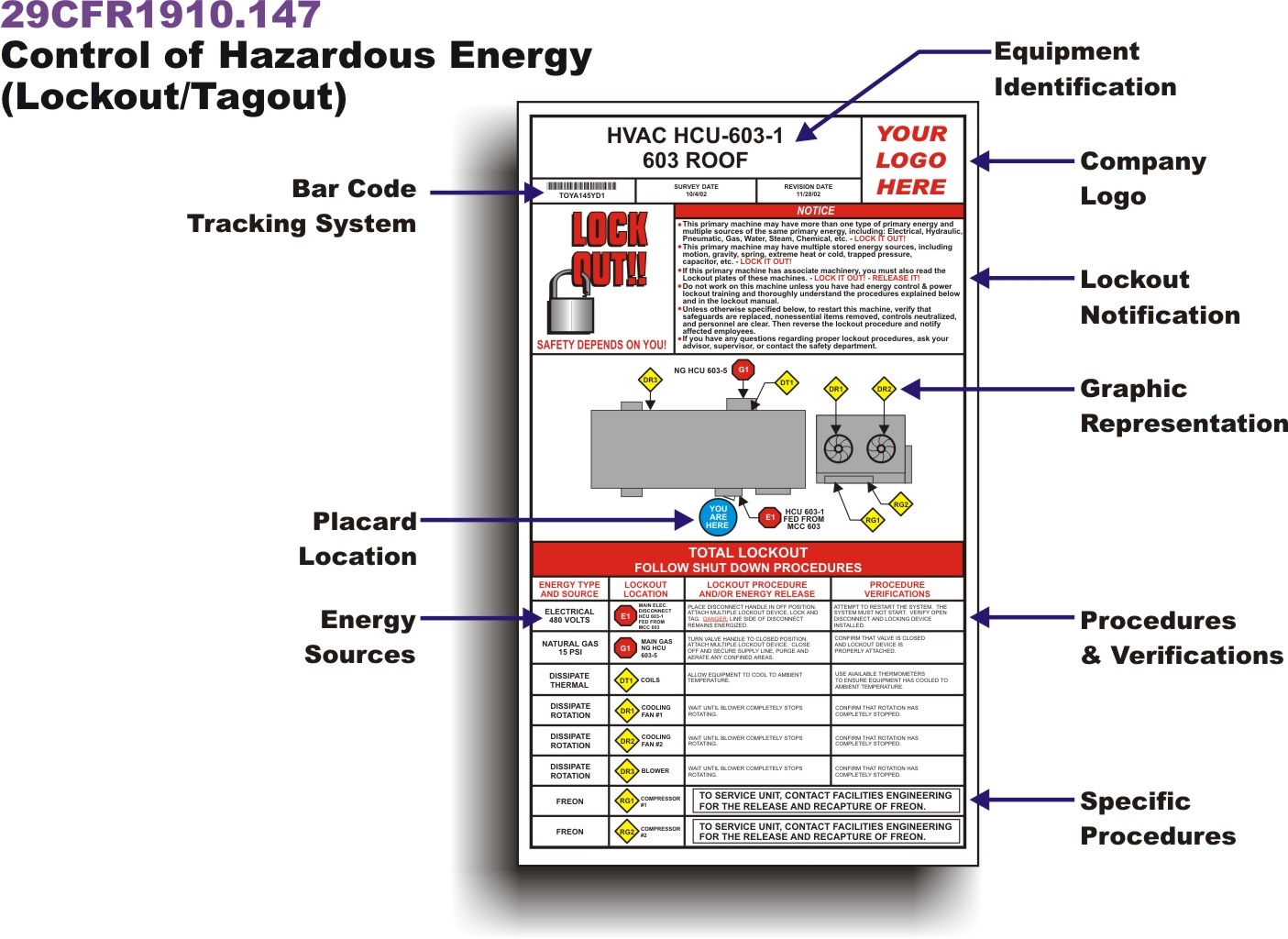
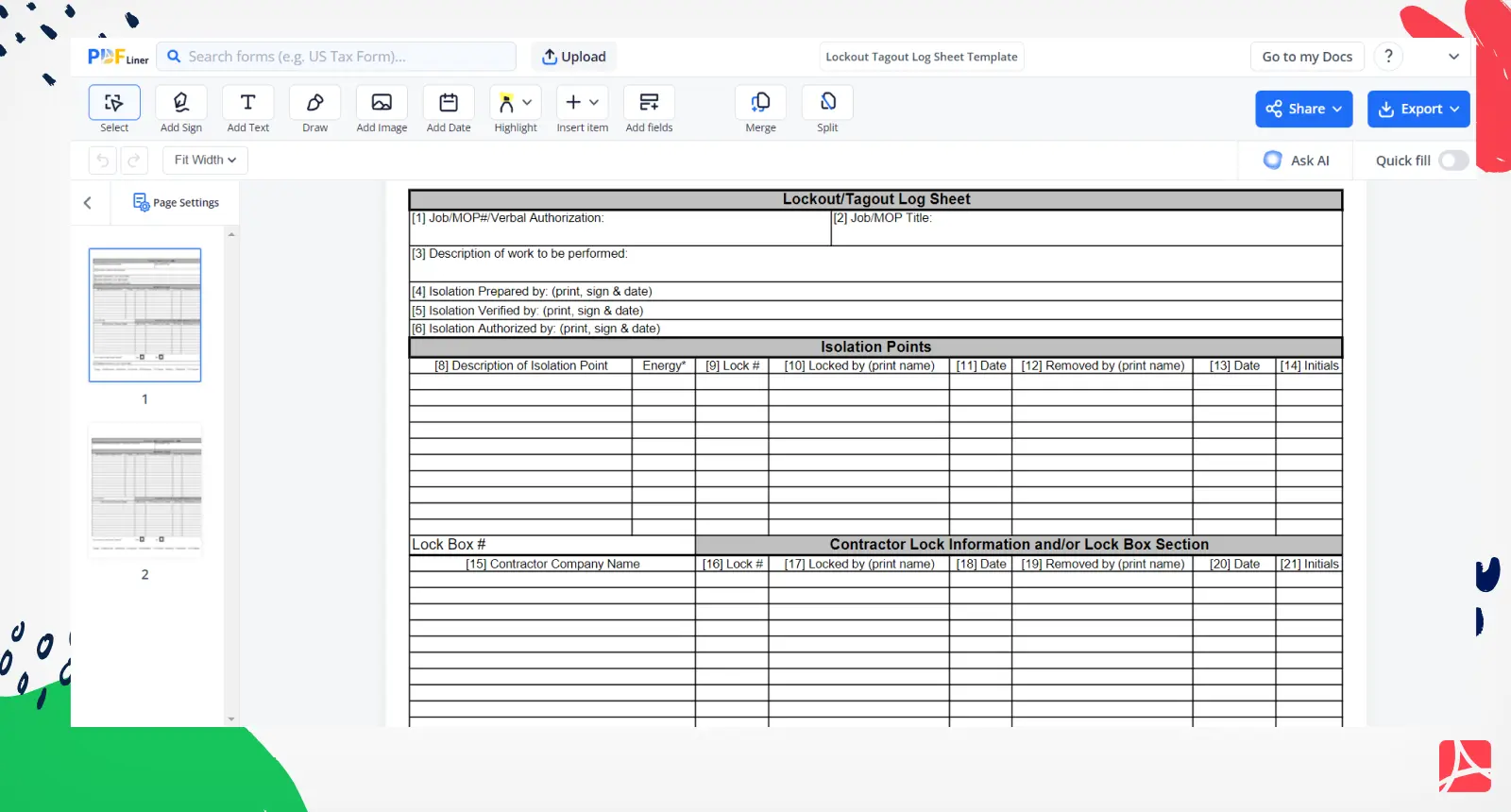
A printable LOTO log sheet fulfills that requirement efficiently. It records: - Equipment ID - Authorized employee - Date and time of lockout - Type of energy isolated (electrical, hydraulic, pneumatic, etc.) - Lock and tag numbers used - Reason for servicing - Clearance and re-energization time
Without this, you lose traceability. Auditors won’t accept verbal assurances. Courts won’t accept “we followed procedure” without proof.
Real-world consequence: A 2022 OSHA citation fined a Midwest manufacturing plant $76,000 after an employee was injured during conveyor maintenance. The investigation found repeated LOTO events with no documentation—despite having forms available. The forms weren’t used consistently, and no management review existed.
A printable log sheet makes compliance repeatable, not reliant on memory.
Key Elements of an Effective LOTO Log Sheet
Don’t settle for a basic checklist. An effective printable LOTO log captures all necessary data while remaining practical for field use. Include these core components:
1. Equipment Identification Specify machine name, ID number, and location. Vague entries like “machine near west bay” are useless during audits.
2. Authorized Employee Section List the name, ID, and signature of the employee applying the lock. This assigns ownership.
3. Energy Source Breakdown List each energy type isolated:
- Electrical (circuit breaker #)
- Hydraulic (valve shut, pressure bled)
- Pneumatic (air line capped)
- Mechanical (springs secured)
This ensures comprehensive isolation.
4. Lock and Tag Tracking Record lock numbers and tag IDs. This allows verification during shift changes or unexpected absences.
5. Time Stamps Log exact start and end times. This helps investigate incidents and supports maintenance scheduling.
6. Clearance Verification Include a line for verification by a second authorized person—especially for complex or high-risk tasks.
7. Supervisor Review Add a signature block for supervisor acknowledgment. This closes the loop and reinforces accountability.
Pro Tip: Use carbonless duplicate sheets. The original stays on file; the copy goes with the technician. This prevents loss and supports real-time tracking.
Common Mistakes That Undermine LOTO Logs
Even with a printable log sheet, errors can compromise safety. Here are frequent missteps—and how to avoid them:
❌ Blank Fields Left Unfilled Technicians rushing to start work often skip non-mandatory sections. Result? Incomplete records. Fix: Make all fields mandatory. Use digital enforcement if moving paperless, or conduct weekly log audits.
❌ Generic Equipment Names Writing “pump” instead of “Pump #3, Heat Exchanger B” creates confusion. Fix: Use standardized equipment naming from your master list.
❌ No Lock Number Tracking Without logging lock IDs, you can’t confirm who applied what—or when it was removed. Fix: Require lock numbers on every entry.
❌ Delayed Log Completion Filling out the log after the job is done risks memory errors. Fix: Mandate that logs are completed in real time—before re-energization.
❌ Poor Storage and Retrieval Logs shoved in a drawer won’t help during an audit or incident review. Fix: Store logs in labeled binders by month, or scan and archive digitally.
Printable LOTO Log Templates You Can Use Today
Not every workplace needs a custom-built system. For many, a well-designed printable template is more than sufficient. Below are five free, downloadable LOTO log sheet formats—ready for immediate use.
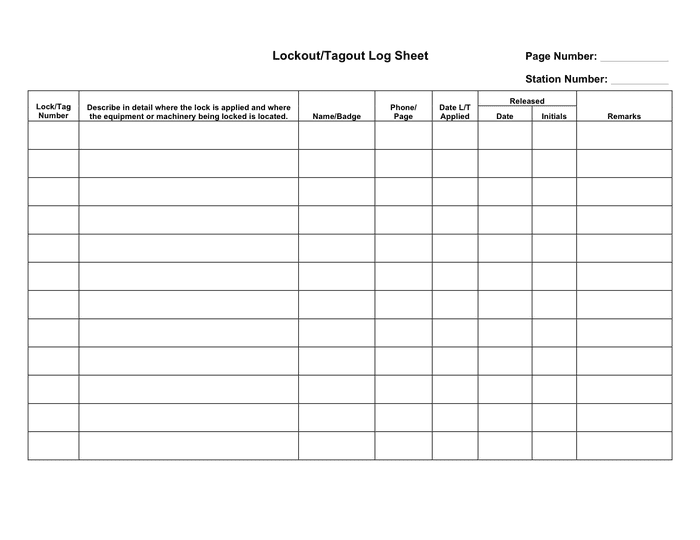
1. Basic Single-Use LOTO Log Best for small teams or infrequent maintenance. - One page per event - Simple fields: equipment, employee, energy types, times - Minimalist design for quick completion
Ideal for: Facilities with fewer than five LOTO events per month.
2. Multi-Shift LOTO Tracking Sheet Designed for continuous operations. - Tracks lockouts across shifts - Includes handover section for shift relief - Space for supervisor notes
Ideal for: 24/7 plants where lockouts span multiple crews.
3. Master LOTO Register (Monthly) A centralized log for compliance tracking. - One sheet per month - Lists all LOTO events by date - Summarizes equipment, duration, and responsible personnel
Ideal for: Safety managers compiling OSHA reports.
4. Color-Coded Lockout Tag Log Uses color zones for quick scanning. - Green for completed, red for active - Visual status indicators - Includes photo ID field for added verification
Ideal for: High-traffic areas with multiple simultaneous jobs.
5. Combined LOTO & Equipment Service Log Merges lockout data with maintenance records. - Tracks parts replaced, tools used, findings - Links safety to asset performance - Reduces duplicate paperwork
Ideal for: Teams using preventive maintenance systems.
Where to get them: These templates are available from OSHA-compliant safety portals like ComplianceQuest, SafetySafety.com, and NIOSH’s public resource hub. Search “free printable LOTO log sheet” with your specific use case.
How to Implement Printable LOTO Logs in Your Workflow
Having a form isn’t enough. Integration determines effectiveness.
Step 1: Train on the Why, Not Just the How Technicians comply better when they understand the stakes. Use real incident examples in training. Show near-miss reports tied to poor documentation.
Step 2: Place Logs at Point of Use Don’t keep logs in the office. Mount printed sheets in lockout stations near high-risk equipment. Use weatherproof holders in outdoor or washdown areas.
Step 3: Audit Weekly Assign a safety officer to review 10% of logs weekly. Check for completeness, accuracy, and timeliness. Feedback should be immediate.
Step 4: Integrate with Permit-to-Work Systems If your site uses work permits, link the LOTO log to the permit number. This creates a unified safety record.
Step 5: Retire Logs Properly OSHA requires LOTO documentation be retained for at least one year. Store old logs in chronological binders or scanned archives. Label clearly.
Digital vs. Printable LOTO Logs: When to Make the Shift
Printable logs are cost-effective and simple—but not always optimal.
| Factor | Printable Logs | Digital Logs |
|---|---|---|
| Setup Cost | Low | High (software, tablets) |
| Real-Time Visibility | None | Yes (cloud dashboards) |
| Audit Trail | Manual review | Automated timestamps |
| Error Prevention | Relies on user | Field validation |
| Integration | Standalone | ERP/MMS compatible |
Stick with printable if: - You have fewer than 20 LOTO events per month - Internet access is unreliable - Budget is limited
Consider digital if: - You’re preparing for ISO 45001 or similar certification - You have multiple sites needing centralized oversight - You already use CMMS or EAM systems
But even in digital environments, printable logs serve as reliable backups during outages or for contractors unfamiliar with your software.
Real-World Use Cases
Case 1: Food Processing Plant A technician locks out a slicer for blade replacement. He prints a LOTO log from the central station, fills it out, and posts it at the lockout point. The supervisor signs off before re-energization. During an OSHA audit, the log—along with photo evidence—proves compliance. No citations issued.
Case 2: Chemical Facility A night-shift electrician isolates a reactor agitator. He completes the log, but morning crew restarts the system without reviewing it. The log later reveals the oversight. The facility revises its handover procedure, mandating log review before re-energization.
Case 3: Small Machine Shop Owner uses a basic printable log for all equipment. After three months, he notices recurring lockouts on one lathe. Data from the logs leads to a root cause analysis—revealing a faulty interlock. Fixing it reduces downtime by 40%.
These examples show that a log sheet isn’t just compliance—it’s a diagnostic tool.
Final Thoughts: Make LOTO Documentation a Habit, Not a Chore
A printable lockout tagout log sheet isn’t administrative overhead. It’s a living record of safety in action. When filled correctly, it protects workers, satisfies regulators, and strengthens operational discipline.
Don’t wait for an incident to validate its importance. Download a proven template. Train your team. Audit consistently.
Start today: Print one log. Use it completely. File it properly. Repeat.
That’s how compliance becomes culture.
FAQ
What should you look for in Lockout Tagout Log Sheet Printable Guide & Free Templates? Focus on relevance, practical value, and how well the solution matches real user intent.
Is Lockout Tagout Log Sheet Printable Guide & Free Templates suitable for beginners? That depends on the workflow, but a clear step-by-step approach usually makes it easier to start.
How do you compare options around Lockout Tagout Log Sheet Printable Guide & Free Templates? Compare features, trust signals, limitations, pricing, and ease of implementation.
What mistakes should you avoid? Avoid generic choices, weak validation, and decisions based only on marketing claims.
What is the next best step? Shortlist the most relevant options, validate them quickly, and refine from real-world results.