Every year, preventable industrial accidents occur during equipment servicing—often because energy sources aren’t properly isolated. The lockout tagout (LOTO) lock box procedure exists to eliminate this risk. It’s not just a checklist; it’s a systematic approach to controlling hazardous energy that protects maintenance personnel from unexpected machine startups, electrocution, or mechanical release of stored energy.
When multiple workers are involved in servicing complex machinery, a single lock isn’t enough. That’s where a lockout tagout lock box—commonly called a group lockout box—becomes essential. This article breaks down the procedure, common pitfalls, real-world applications, and best practices to ensure your team stays safe and compliant.
What Is a Lockout Tagout Lock Box?
A lockout tagout lock box is a secure container used during group maintenance tasks. When multiple employees service a single machine, each applies their personal lock to isolate energy sources. The keys to these locks are placed inside the lock box, which is then secured with the locks of all authorized personnel. No one can restart the machine until every worker removes their lock—ensuring no one is trapped inside or near the equipment during re-energization.
Unlike individual lockout devices, the lock box supports coordinated safety in environments where overlapping maintenance tasks occur—like manufacturing lines, processing plants, or large-scale HVAC systems.
Key Components of a Lockout Box Setup
- Group Lockout Box: Central container for keys or hasps
- Personal Locks: One lock per authorized employee
- Tags: Warning labels with name, date, and reason
- Energy Isolating Devices: Valves, breakers, disconnects
- Hasp or Multi-Lock Adapter: Allows multiple locks on one point
Without this system, the risk of premature re-energization skyrockets—especially during shift changes or complex repairs.
Step-by-Step Lockout Tagout Lock Box Procedure
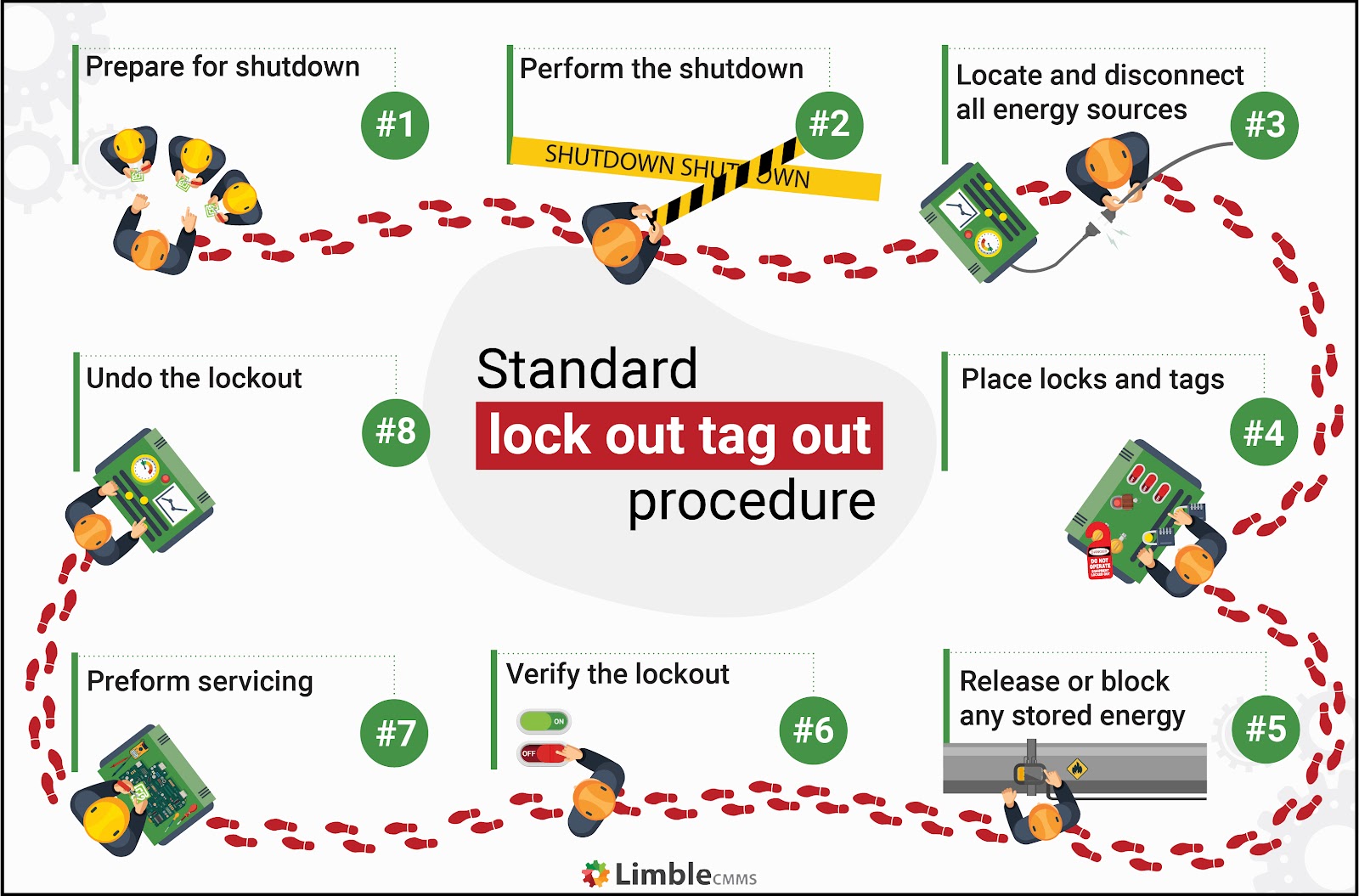
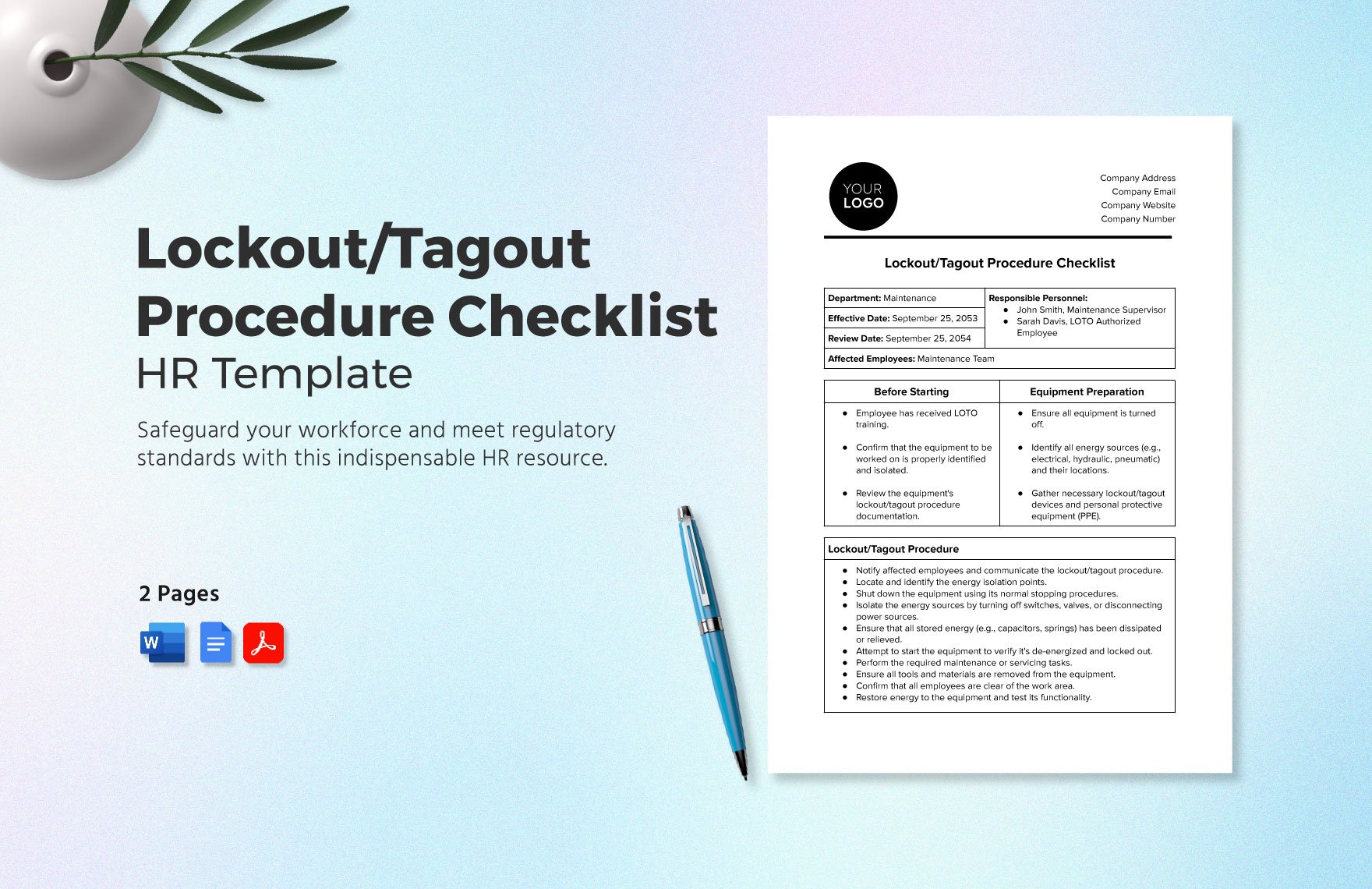
The OSHA-mandated LOTO process becomes more structured with a lock box. Follow these steps for a compliant and effective procedure:
1. Prepare for Shutdown
- Notify all affected employees
- Identify all energy sources (electrical, hydraulic, pneumatic, chemical, thermal)
- Review the machine-specific LOTO procedure
Mistake to avoid: Assuming all energy is off after flipping a switch. Stored energy in capacitors, springs, or elevated parts can still be deadly.
2. Shut Down the Equipment
- Stop the machine using normal controls
- Ensure it’s fully de-energized
Use a checklist here. For example, in a conveyor system: - Stop motor via control panel - Confirm belt has stopped moving - Verify no residual motion from gravity or inertia
3. Isolate Energy Sources
- Shut off breakers, close valves, block moving parts
- Apply lockout devices with personal locks
Each worker places their lock on every energy-isolating device. If five people are working, five locks go on the main circuit breaker via a hasp.
4. Store Keys in the Lock Box
- Keys to individual locks are placed inside the group lockout box
- The box is secured with all workers’ locks
This is the critical control point. Until every worker removes their lock, the box stays closed, and keys remain trapped—preventing restart.
5. Release Stored Energy
- Bleed pressure from lines
- Drain fluids
- Discharge capacitors
- Lower suspended loads
Never skip this. A pressurized hydraulic line can rupture and cause fatal injuries even when power is “off.”
6. Verify Isolation (Zero Energy State)
- Attempt to restart the machine using normal controls (while locked out)
- Confirm no movement or energy response
- Return controls to “Off” position
This is the only way to test if the lockout was effective. If the machine shows any response, stop and recheck isolations.
7. Perform Maintenance
- Only now can work begin
- Follow internal safety protocols (PPE, confined space rules, etc.)
8. Remove Lockout Devices
- Confirm tools are removed
- Ensure all employees are clear of the machine
- Each worker removes their own lock and retrieves their key from the box
Golden rule: Only the person who applied the lock can remove it. No exceptions.
9. Re-energize and Restart
- Restore energy sources
- Notify affected personnel before startup
- Restart under controlled conditions
When to Use a Lockout Box: Real-World Scenarios
Understanding when a lock box is necessary separates compliance from chaos.
Scenario 1: Multi-Craft Maintenance on a Production Line A packaging line requires electrical, mechanical, and pneumatic servicing. Electricians, mechanics, and hydraulics specialists all work simultaneously. Without a lock box, one worker finishing early might inadvertently allow re-energization while others are still inside guardrails.
Solution: Each tradesperson applies their lock to the main disconnect. Keys go into the group lock box. Only when all finish and remove their locks can the machine restart.
Scenario 2: Shift Changeovers During Long Repairs A boiler repair spans two shifts. The night crew locks out the system. The day crew arrives and must take over.
Best practice: Use a shift交接 (handover) lockout procedure. Outgoing workers keep their locks on until the incoming worker applies theirs. The lock box holds all keys. This ensures continuity and accountability.
Scenario 3: Contract Workers on Site A third-party technician is repairing a compressor. They may not be familiar with internal protocols.
Risk: They might bypass lockout or forget to retrieve their key.
Fix: Include contractors in LOTO training. Require them to use a personal lock and tag. Their lock must be on the hasp and their key in the box—same as full-time staff.
Common Mistakes and How to Avoid Them
Even experienced teams make critical errors in LOTO procedures.
Mistake 1: Using a Master Key to Remove Locks Some supervisors keep a master key to “speed things up.” This violates OSHA and creates catastrophic risk.
Consequence: A worker inside a machine is injured when it powers on unexpectedly.
Fix: Enforce the “one lock, one key, one person” rule. No overrides.
Mistake 2: Tagging Without Locking “Tagout-only” procedures are allowed only if lockout isn’t feasible—but they require additional safety steps.
Reality: Tags can be ignored. A red tag with “Do Not Operate” means nothing if someone flips a switch anyway.
Fix: Use lockout wherever possible. If tagout is used, implement strict procedures: periodic inspections, secondary restraints, and employee training.
Mistake 3: Poor Lock Box Placement Putting the lock box far from the machine leads to confusion.
Example: A box in the office while the machine is on the shop floor.
Fix: Mount the lock box near the energy isolation point. Use weatherproof enclosures if outdoors.
Mistake 4: Incomplete Energy Source Identification Failing to locate all energy types leads to uncontrolled releases.
Case: A technician opens a valve thinking it’s off—only to be hit by steam from a trapped line.
Fix: Conduct energy surveys. Map every energy source per machine. Update lockout procedures accordingly.
OSHA Compliance and Legal Implications
OSHA standard 29 CFR 1910.147 governs control of hazardous energy. Non-compliance isn’t just risky—it’s expensive.
Key OSHA Requirements:
- Written energy control procedures
- Annual employee training
- Periodic inspections (at least yearly)
- Use of durable, standardized locks and tags
- Prohibition of lock removal by unauthorized personnel
Fines for LOTO violations routinely exceed $10,000 per instance. In 2023, a food processing plant was fined over $145,000 after an employee lost fingers due to improper lockout.
More importantly, compliance isn’t about avoiding penalties—it’s about preventing life-altering injuries. The lockout box is not optional in multi-person operations; it’s a legal and moral imperative.
Choosing the Right Lockout Tagout Lock Box
Not all lock boxes are created equal. Select based on your operational needs.
| Feature | Description | Why It Matters |
|---|---|---|
| Material | Steel or polycarbonate | Durability in harsh environments |
| Locking Points | Number of padlock slots | Supports team size |
| Weather Resistance | IP rating or NEMA enclosure | Outdoor or washdown areas |
| Visibility | Transparent lid or window | See keys without opening |
| Mounting Options | Wall, magnetic, portable | Flexibility in placement |
Top 5 Lockout Box Options
- Grace Industries GLO-30
- - 13-lock capacity
- - Heavy-duty steel, transparent door
- - Ideal for manufacturing floors
- Seton 89516K
- - 6-lock box with tag holder
- - Compact, wall-mountable
- - Great for small teams or tight spaces
- Justrite 72130
- - 10-lock capacity, polycarbonate
- - Corrosion-resistant, UV-stable
- - Perfect for chemical plants
- Honeywell S17900100
- - Modular design, expandable
- - Supports up to 20 locks
- - Best for large maintenance crews
- DEWALT DWTOOL01
- - Portable, rugged
- - Includes hasp and tags
- - Suited for field service teams
Choose based on team size, environment, and integration with existing LOTO kits.
Training and Culture: Making LOTO Stick
A procedure is only as strong as the team following it.
Effective Training Tips:
- Conduct hands-on drills quarterly
- Use real machines (de-energized) for practice
- Include new hires and contractors
- Document all training sessions
Build a Safety Culture:
- Empower workers to stop unsafe actions
- Recognize LOTO compliance publicly
- Review near-misses to improve procedures
When lockout becomes second nature—not a burden—accidents drop dramatically.
Final Thoughts: Safety Is a Procedure, Not a Slogan
The lockout tagout lock box procedure isn’t bureaucracy. It’s a proven system that saves lives. From identifying energy sources to verifying zero energy state, every step matters. The lock box ensures that collective safety isn’t compromised by individual actions.
Implement it rigorously. Train consistently. Audit regularly. Your team’s safety depends not on luck, but on procedure.
Act now: Audit your current LOTO process. Is a group lock box used whenever multiple workers service equipment? If not, install one—and train your team this week.
Frequently Asked Questions
What is the purpose of a lockout tagout lock box? It ensures that equipment cannot be re-energized until all workers involved in maintenance have completed their tasks and removed their personal locks.
Who can remove a lock from the lock box? Only the employee who applied the lock can remove it. Supervisors cannot override or remove locks on behalf of others.
Can a lockout box be used for tagout-only procedures? Yes, but only if lockout is not feasible. Tagout requires additional safety measures and is less secure than physical lockout.
How many locks can a typical lockout box hold? Most boxes support 6 to 13 locks, though modular systems can accommodate 20 or more.
Is a lockout box required by OSHA? OSHA doesn’t specifically mandate lock boxes, but they are necessary to comply with group LOTO requirements under 29 CFR 1910.147.
What happens if a worker forgets to remove their lock? The machine stays locked out. The lock can only be removed under a formal "authorized removal" process, including verification the employee is not on-site and has been contacted.
Can lockout boxes be used outdoors? Yes, if they are rated for outdoor use (NEMA 3 or IP65). Look for weather-resistant materials and sealed enclosures.
FAQ
What should you look for in Lockout Tagout Lock Box Procedure: A Complete Safety Guide? Focus on relevance, practical value, and how well the solution matches real user intent.
Is Lockout Tagout Lock Box Procedure: A Complete Safety Guide suitable for beginners? That depends on the workflow, but a clear step-by-step approach usually makes it easier to start.
How do you compare options around Lockout Tagout Lock Box Procedure: A Complete Safety Guide? Compare features, trust signals, limitations, pricing, and ease of implementation.
What mistakes should you avoid? Avoid generic choices, weak validation, and decisions based only on marketing claims.
What is the next best step? Shortlist the most relevant options, validate them quickly, and refine from real-world results.